
Jigsawcard Solitaire Puzzle
Oakever GamesPuzzle
4.65.13K Reviews
- Version
- 1.5.24
- Installs
- 10.00M
- Age Rating
- Everyone
Screenshots
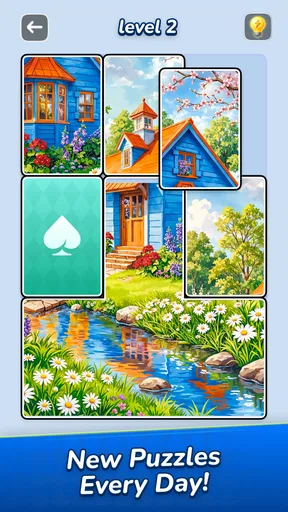
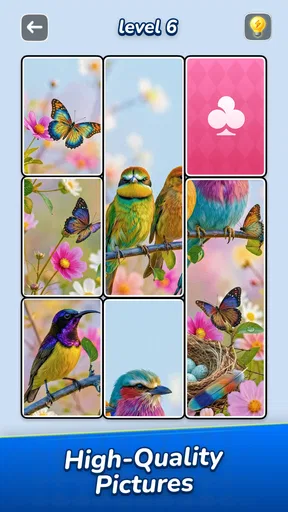
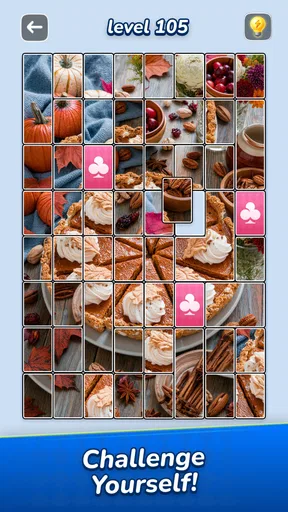
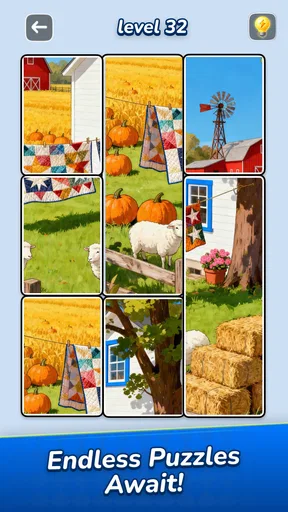
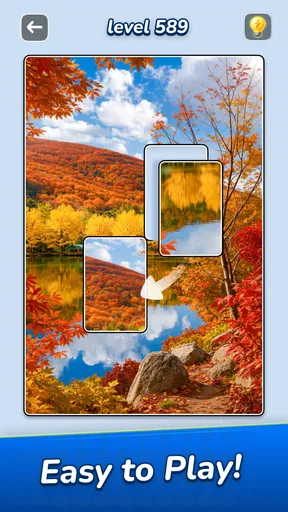
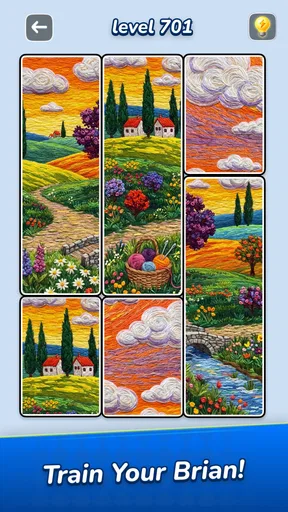
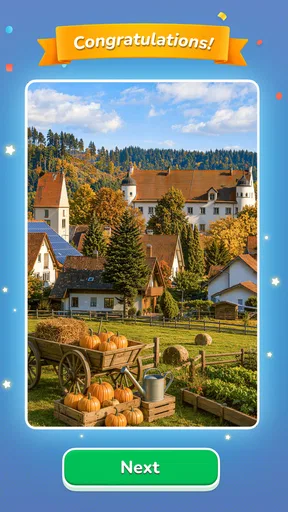
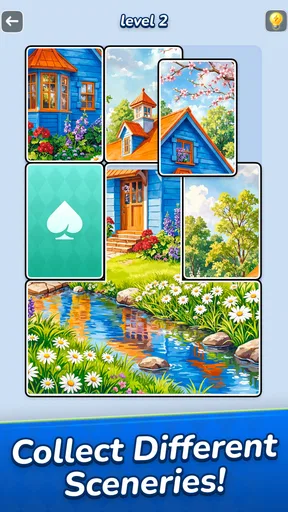
Our Review of Jigsawcard Solitaire Puzzle
 Analysis by Appyee
I usually think of solitaire and jigsaw games as separate kinds of downtime: one is about planning moves, while the other is about patiently building a picture. Jigsawcard Solitaire Puzzle brings those ideas together in a way that feels easy to understand almost immediately. I slide card-shaped pieces into place, match the right positions, and gradually turn a scrambled image into a complete puzzle. That simple loop makes it a comfortable choice for short breaks, but it also has enough visual attention and decision-making to keep me engaged longer.
What makes this game especially interesting in a household is that it works well as a shared-device activity without demanding that everyone play in exactly the same way. One person can take a few turns while waiting for dinner, another can continue later, and a child or older relative can enjoy the picture-building side without needing to learn a complicated control scheme. I would not treat it as a substitute for a dedicated family game with separate profiles, though. Its appeal comes from its straightforward puzzle format, not from elaborate household management.
How the card-and-jigsaw idea feels in everyday play
The central action is based on moving pieces, matching them, and snapping them into their intended places. That sounds modest, but the combination changes the rhythm compared with a conventional jigsaw app. Instead of staring at a large open board and manually arranging loose fragments, I am making smaller placement decisions that feel closer to a card puzzle. The result is less intimidating when I only have a few minutes, while still giving me a reason to slow down when the image becomes harder to read.
In my experience, the best moments come when I stop trying to solve the whole picture at once. I first look for pieces with obvious edges, strong colors, or distinctive objects, then use those as anchors. Once a small group is correct, the surrounding pieces become easier to judge. This is a useful tactic on a phone because the screen is limited: working in sections reduces the need to constantly zoom mentally between the full image and tiny details.
The high-definition presentation helps the finished pictures feel rewarding, but it also exposes one of the game’s trade-offs. Fine detail can make a puzzle attractive and more challenging, yet small visual differences may become tiring on a compact display. I found it more comfortable to play with the phone held steadily rather than trying to solve it while walking or multitasking. The game is casual, but it still rewards a little concentration.
Because the game is free, it is easy to try without turning the decision into a purchase. That matters for a shared phone or tablet: a family member can test the style during a spare moment, and the owner has not committed to buying a title that may only suit one person. The free entry point also makes it a practical alternative to physical jigsaw puzzles when storage, table space, or cleanup is a concern.
A realistic shared-device routine
Imagine a household using one tablet in the evening. I might begin a puzzle after work, complete a few placements, and leave the device on the coffee table. Someone else could pick it up later and continue from the visible game state, provided we agree not to disturb the current puzzle. That arrangement feels natural because the activity is turn-based in spirit, even though it is not designed as a formal multiplayer session.
For this kind of use, I would establish a simple rule: the person who starts a picture says whether it is open for everyone or reserved for them. That small bit of coordination prevents the most common shared-device problem—someone changing progress without realizing it matters. It also makes the game more pleasant for children, who may want to experiment, and adults, who may prefer to finish a carefully chosen challenge alone.
There is another useful routine for mixed attention spans. A younger player can search for bright, recognizable sections while an adult handles the more repetitive background. This turns the puzzle into a cooperative activity without pretending that the app offers a dedicated team mode. It works best when the screen is large enough for both people to see comfortably and when the adults accept that solving speed is less important than sharing the task.
What to decide before putting it on a family device
Installation is only one part of setting up a game on a shared phone. I would first decide whose device account is being used and who is allowed to reset or remove the game. That is not a feature of Jigsawcard Solitaire Puzzle; it is a sensible household boundary. A child may be welcome to play, but the device owner should still control downloads, storage, and any account-level decisions connected with the device.
I would also avoid presenting the game as a personal progress space for several people unless the household has already agreed on how to share it. A single visible game can become confusing when one person expects to resume a puzzle and another has moved on. If several players want independent progress, a shared-device arrangement may be less suitable than separate devices or a game specifically built around profiles.
That distinction is important because a simple puzzle can look more private than it really is. Anyone holding the device may be able to see the current state, so I would not use it as a place to store personal information or assume that each player has a separate boundary. The right way to enjoy it together is to treat the game as a common activity unless the device setup clearly separates users.
The developer is Oakever Games, and the current version is 1.5.19. Those details are useful when checking whether the title on a household device is the same release being discussed, especially if several similarly named puzzle games appear in search results. I would look for the exact name and developer before installing, rather than relying on a familiar-looking icon.
Coordination makes the casual format work better
Jigsawcard Solitaire Puzzle does not need a schedule, but shared use benefits from a little coordination. My preferred approach is to keep one puzzle active until the person who began it is finished, then let the next player choose whether to continue or start another. This avoids turning a relaxing pastime into a negotiation over whose progress counts.
For a family with different skill levels, I would divide the experience by role rather than by score. One player can identify likely matches, another can perform the slides, and a third can check the completed image for mistakes. That approach is particularly useful when an older relative enjoys visual matching but finds small touch targets less comfortable. It also gives a child a meaningful part in the process without requiring the child to manage the whole puzzle independently.
A practical tip is to play in short, deliberate sessions when the image contains many similar textures. I find that fatigue makes nearly identical pieces look interchangeable, leading to unnecessary moves and frustration. Taking a pause is more effective than repeatedly forcing a guess. The game’s casual nature supports this: there is no need to prove anything by finishing in one sitting.
Another tip is to use the completed image as a reference rather than relying only on the shape of a piece. A patch of sky, foliage, fabric, or repeated pattern may have several visually similar candidates. I compare color transitions and object boundaries, then place the piece only when both clues agree. This is slower than random sliding, but it reduces the sense that progress depends on luck.
That method also reveals who will enjoy the game most. Players who like visual sorting, gradual improvement, and quiet concentration will probably settle into it quickly. People who want fast reactions, competition, narrative progression, or a constant stream of new mechanics may find the basic structure too restrained. The card framing gives the puzzles a distinct identity, but it does not transform them into a deep strategy game.
Age, trust, and the limits of a shared puzzle
The content rating is Everyone, which makes the game broadly approachable for households looking for a non-violent puzzle activity. I would still match the experience to the individual rather than treating an age label as a complete recommendation. Very young children may need help with touch accuracy and with understanding why a piece belongs in one place instead of another. Older players may appreciate the calm format but prefer a larger screen and brighter viewing conditions.
Trust matters more than supervision in this particular use case. A child using a parent’s phone should know whether they may continue an existing puzzle, switch to another one, or adjust anything outside the game. Those are household agreements, not promised app controls. If a family needs strict account separation, detailed activity oversight, or a locked-down child environment, I would choose a device setup and app category designed for those needs instead of expecting this puzzle to provide them.
The game is also a reasonable option for a relative who does not enjoy conventional card games. The word “solitaire” may suggest a familiar patience game, but the actual appeal here is the visual assembly of an image. I would explain that before handing it over, because someone looking for classic card layouts may be surprised by the jigsaw emphasis. Conversely, a person who finds ordinary jigsaw apps too open-ended may appreciate the more contained card-like interaction.
On a shared tablet, I would position the device so that glare does not hide subtle differences in the picture. This is a small environmental change, but it has a noticeable effect on comfort. A stable surface also makes dragging and sliding more precise than playing with the tablet balanced on a lap. These details are easy to overlook because the controls are simple, yet they determine whether the game feels relaxing or fiddly.
How it compares with familiar alternatives
Compared with a traditional jigsaw app, this game feels more structured and less like managing a large tabletop. That is an advantage when I want a neat, focused activity on a phone. A conventional jigsaw format may be better for someone who enjoys freely sorting hundreds of loose pieces, rotating them, and building a broad composition over a long session. Jigsawcard Solitaire Puzzle is better suited to players who prefer smaller decisions and a clearer sense of each placement.
Compared with classic solitaire, it asks for a different kind of attention. Standard solitaire is usually about planning card sequences and anticipating future moves. Here, the important skill is recognizing visual relationships and fitting the right card-like piece into the picture. I would recommend ordinary solitaire to someone who wants a familiar ruleset with more emphasis on move planning, while this title suits someone who wants the satisfaction of completing an image.
It also differs from fast match-three games. Those games are often built around speed, chains, and immediate visual feedback. This one is calmer and more deliberate; the reward comes from making the picture clearer rather than creating rapid combinations. That makes it a better fit for a waiting room, a quiet evening, or a short mental reset, but a weaker choice for anyone seeking energetic action.
The game has attracted a substantial audience, with an average rating of 4.6 from around 372 thousand ratings and more than 10 million installs. I see those figures as evidence that the basic concept has broad appeal, not as proof that every player will enjoy it. The audience size makes it easier to regard the title as an established casual option, while the individual experience still depends on screen comfort, patience, and expectations.
Small frictions worth knowing before you commit
The biggest limitation is repetition. The slide-and-match loop is pleasant because it is simple, but that same simplicity can become predictable. I would not choose it as my only puzzle game if I wanted a constantly changing set of rules or a strong sense of long-term progression. Its strength is reliable relaxation, not dramatic variety.
Visual similarity can create another source of friction. When several pieces share the same colors or texture, the difference between a satisfying deduction and a frustrating guess may be very small. I handle that by working from distinctive boundaries and taking breaks before my eyes become tired. Players who dislike ambiguity may prefer puzzles with clearer shapes or more explicit guidance.
There is also a social limitation: shared play is informal rather than built around clearly separated household identities. That can be perfectly fine for a couple or family using one tablet casually, but it is less ideal when everyone wants private progress. I would make that decision before installing, because no amount of enthusiasm for the pictures solves a conflict over a single shared game state.
The game is free and rated Everyone, but those facts should not be confused with a guarantee that it will suit every family arrangement. The device owner remains responsible for deciding how the app fits into the household, who may use it, and what kind of supervision is appropriate. I like the title as a low-pressure puzzle, not as a complete family-management solution.
Who should download it, and who should skip it?
I would recommend it to someone who wants a gentle puzzle that can be picked up without a tutorial-heavy commitment. It is especially suitable for visual thinkers, casual solitaire fans curious about a different format, and households that enjoy passing a tablet around for short shared activities. The card presentation gives the familiar picture-completion idea a slightly different feel, and the free price makes experimentation easy.
I would be more cautious if you need separate profiles, private progress, or strong controls for a child’s device use. I would also point elsewhere if your priority is competitive multiplayer, deep strategic planning, or a large physical-puzzle simulation. In those cases, a traditional jigsaw app, a classic solitaire title, or a purpose-built family game may be a better match.
For a quick test, I suggest playing one puzzle when you are fresh and another after a short break. Notice whether you enjoy identifying visual anchors or whether similar pieces make you impatient. Then try the same activity with another household member and agree beforehand about who owns the current progress. That small experiment tells you more than the store summary because it tests both the puzzle style and the shared-device reality.
My household verdict
After spending time with Jigsawcard Solitaire Puzzle, I see it as a thoughtful casual game rather than a feature-packed platform. Its best quality is the way it turns picture assembly into a compact, card-like routine that works on a phone or tablet. I can imagine recommending it to a friend who wants something quieter than a match-three game and more visual than ordinary solitaire.
It is also a sensible shared-device choice when expectations are clear. Let one person finish a puzzle, invite others to help with difficult sections, and treat the current game as communal unless the device arrangement says otherwise. That approach keeps the experience friendly and avoids assuming that a simple game automatically provides separate household boundaries.
With a content rating of Everyone and a free download, it is easy to try across a broad age range. The title was released on November 14, 2025, and supports devices running Android 7.1 or later, so compatibility is worth checking before handing an older phone to a family member. I would not install it for its statistics alone; I would install it because the particular mix of sliding, matching, and image completion fits the kind of calm break I want.
My final recommendation is simple: choose it for relaxed visual problem-solving and informal shared play, but skip it if you need private profiles, intense competition, or constant mechanical variety. For the right household, that modest focus is exactly what makes the game easy to return to.
Privacy and Permissions
See what permissions an app requests and how it handles your data.
- Photos/Media/Files
- read the contents of your USB storage, modify or delete the contents of your USB storage
- Storage
- read the contents of your USB storage, modify or delete the contents of your USB storage
- Wi-Fi connection information
- view Wi-Fi connections
- Other
- view network connections, full network access, control vibration, prevent device from sleeping
Verdict
Strengths of Jigsawcard Solitaire Puzzle
- Combines classic solitaire with relaxing jigsaw assembly.
- Short rounds make it easy to play during quick breaks.
- Gradual difficulty keeps puzzles accessible for casual players.
- Colorful artwork gives completed puzzles a satisfying payoff.
- Offline play is useful when traveling or without reliable internet.
Limitations of Jigsawcard Solitaire Puzzle
- Some later puzzles may require considerable time to complete.
- Repeated card layouts can make progression feel somewhat predictable.
- Hints and assistance may reduce the challenge for experienced players.
- Small card details can be difficult to see on compact screens.
- Progress may feel slow if rewards or new images unlock gradually.
Other Releases by Oakever Games
View All

Similar Picks in This Category
View All
Block Blast!
HungryStudio4.8

Braindom: Brain Games Test
Lahana Game Studio4.6

AMAZE!
CrazyLabs LTD4.6

Sudoku - Classic Sudoku Puzzle
Oakever Games4.7

Art Puzzle - Puzzle Games
Easybrain4.8

Amaze GO!
Oakever Games4.9
Frequently Asked Questions
What is Jigsawcard Solitaire Puzzle and how does it work?
Jigsawcard Solitaire Puzzle combines classic solitaire-style card play with jigsaw puzzle progression. In general, you complete card challenges to earn pieces, images, or rewards that help assemble a larger picture. The game is designed for casual sessions, with simple tap-based controls, gradually increasing difficulty, and a relaxing presentation that makes it suitable for players who enjoy both traditional card games and picture puzzles.
Is Jigsawcard Solitaire Puzzle free to download and play?
Jigsawcard Solitaire Puzzle can typically be downloaded for free, allowing players to start playing without an upfront purchase. However, free-to-play games may include optional in-app purchases for coins, boosters, extra moves, lives, or other convenience features. Before downloading, it is worth checking the store listing for the current pricing, advertisements, subscription details, and whether any purchase restrictions should be enabled for children.
Does the game require an internet connection?
The basic solitaire and puzzle experience may work during some offline sessions, but certain features can depend on an internet connection. Advertisements, daily bonuses, cloud synchronization, event content, leaderboards, and in-app purchases may not function correctly without access to the internet. If offline play is important to you, test the game after installation and review its store description, since connectivity requirements can change through updates.
Is Jigsawcard Solitaire Puzzle suitable for beginners?
Yes, the game is generally approachable for beginners because solitaire rules are familiar to many players and the controls are usually based on straightforward taps or card movements. Early levels commonly introduce the mechanics at a comfortable pace, while later challenges may require more planning and careful use of limited moves or boosters. Players who prefer relaxed gameplay should still expect occasional difficult stages.
Are there advertisements or optional purchases in Jigsawcard Solitaire Puzzle?
Players should expect that Jigsawcard Solitaire Puzzle may use advertising and optional purchases as part of its free-to-play model. Ads can appear between rounds or be offered in exchange for bonuses, while purchases may provide coins, hints, boosters, or additional attempts. These features are not always necessary to progress, but they can affect the experience, so review the permissions and payment information before installing.
Play our best games!


